
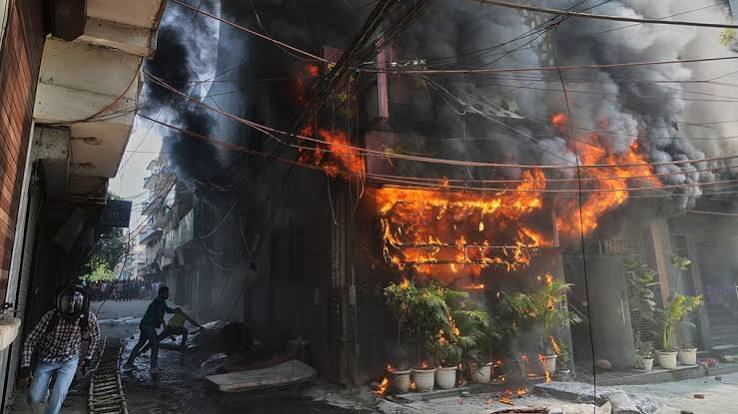
21 lives lost in a blaze that locals say emergency responders took nearly an hour to reach. The tragedy has ignited a debate on accountability, preparedness, and the value of human life.
In a city where groceries can arrive at your doorstep in 10 minutes, a devastating fire in South Delhi has triggered an uncomfortable question: why did emergency help reportedly take close to an hour to reach people fighting for their lives?
The question has gained urgency after a massive blaze tore through Flourish Stays, a bed-and-breakfast facility in Delhi’s Malviya Nagar, killing 21 people, including 12 foreign nationals. Eyewitnesses claim fire tenders reached the spot nearly 50 to 60 minutes after flames first erupted around 8 am, despite a fire station being located just minutes away.
For many, the tragedy is not just about a fire. It is about whether a faster emergency response could have prevented some of those deaths.
The fire reportedly started on the ground floor, where the building’s kitchen and cafeteria were located, before rapidly engulfing the upper floors. As smoke filled the five-storey structure, panic spread among guests trapped inside.
In the crucial early moments, it was not emergency responders but local residents who led rescue efforts. Videos from the scene showed people smashing windows, laying mattresses on the ground for those forced to jump from upper floors, and performing CPR on unconscious victims.
Residents say precious time was lost.
“Only ambulances have arrived. The fire brigade is still nowhere to be seen. Many people are trapped inside,” a local can be heard saying in a viral video recorded during the chaos.
The tragedy has also exposed serious questions about safety compliance. Authorities allege the hotel was operating far beyond its approved capacity and lacked mandatory fire safety clearances. The owner has since been arrested.
Political controversy has now erupted over the response timeline.
According to local accounts, the fire broke out around 8 am and emergency services were informed shortly thereafter. The Delhi government, however, maintains that police received information only at 8:48 am. Fire officials insist they acted immediately after receiving a call at 8:50 am and deny any delay.
Yet critics argue that explanation raises another troubling question: how could a massive fire producing thick black smoke in a densely populated neighbourhood go unnoticed for nearly an hour by authorities located only minutes away?
AAP leader Saurabh Bharadwaj questioned the official version, pointing out that residents had already begun rescue operations long before emergency teams arrived.
For grieving families, the debate is no longer about timelines alone. It is about accountability.
The Malviya Nagar fire has become a stark symbol of a deeper contradiction. India has built systems capable of delivering food, groceries and convenience at record speed. But when lives were hanging in the balance, many believe the system moved far too slowly.
And that is the question now echoing across the country: if convenience can arrive in 10 minutes, why can’t emergency help?