
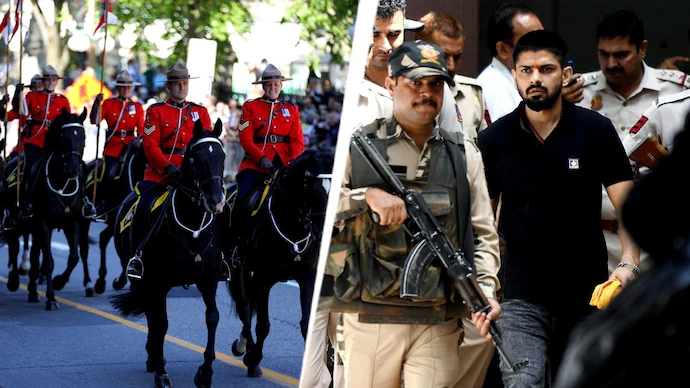
A stunning disclosure in a Canadian court has once again thrust jailed gangster Lawrence Bishnoi and his alleged international network into the spotlight. During an immigration hearing, Canadian police revealed that the Bishnoi gang had allegedly claimed it had more than 1,000 members ready to carry out shootings across Canada and was running a widespread extortion racket targeting members of the South Asian community.
The revelation is significant not just because of the numbers involved, but because it highlights how a criminal network that originated in India is increasingly becoming an international security concern.
Here are five reasons why this development matters:
1. Canada Believes the Threat Is Real
This is no longer a claim circulating on social media or among rival gangs. The allegation was presented before a Canadian immigration tribunal by law enforcement officials.
According to police testimony, the gang sent a letter boasting of its ability to mobilise hundreds of armed operatives and carry out targeted attacks. The fact that Canadian authorities are treating the threat seriously indicates the level of concern surrounding the group’s activities.
2. The Bishnoi Network Is No Longer Just an Indian Issue
For years, Lawrence Bishnoi was primarily seen as a gangster operating from India. That perception has changed dramatically.
Canadian authorities now believe the network has links and operatives across multiple countries, including Canada, the United States, the United Kingdom, Australia and the UAE. The latest revelations suggest that what began as a regional criminal syndicate may have evolved into a transnational organised crime network.
3. Indian-Origin Communities Are Being Directly Targeted
Perhaps the most alarming aspect of the investigation is that the alleged extortion racket is largely aimed at South Asian business owners and families living in Canada.
Police say business owners have received threats demanding large sums of money. Those who refuse to pay have allegedly faced shootings at homes, restaurants, shops and other properties.
Given that Canada is home to more than three million people of Indian origin, the issue has become a major safety concern for the diaspora.
4. Student Visa Holders and Temporary Workers Are Under Scrutiny
Canadian investigators have claimed that many individuals allegedly linked to extortion operations were relatively new arrivals in the country, including temporary foreign workers and international students.
According to testimony, some recruits were allegedly drawn into criminal activities through promises of money, influence or belonging to a powerful organisation.
This aspect of the investigation is likely to trigger wider debates about immigration screening, organised crime recruitment and community safety.
5. It Shows How Gang Warfare Has Gone Global
The Bishnoi gang has frequently made headlines in India due to its alleged links to high-profile crimes and extortion cases. However, recent incidents in Canada—including shootings linked to businesses, entertainers and public figures—suggest that these criminal rivalries have crossed borders.
Canadian authorities have already designated the Bishnoi gang as a terrorist entity, an extraordinary step that reflects the seriousness with which the country views the threat.
The latest court revelations indicate that law enforcement agencies are now dealing not merely with isolated criminal acts, but with what they believe could be a coordinated international network capable of intimidation, extortion and violence.
The Bigger Picture
The Canadian court testimony marks another chapter in the growing international focus on the Lawrence Bishnoi network. Whether the claim of “1,000 shooters” proves accurate or exaggerated, the fact that such allegations are being discussed in official proceedings underscores a larger reality: criminal organisations born in one country can now operate, recruit and exert influence across continents.
For Canada, the issue has become a law-and-order challenge. For India, it is a reminder of how domestic organised crime networks can acquire a global footprint. And for the Indian diaspora, it raises serious concerns about safety, extortion and the growing reach of transnational criminal groups.