
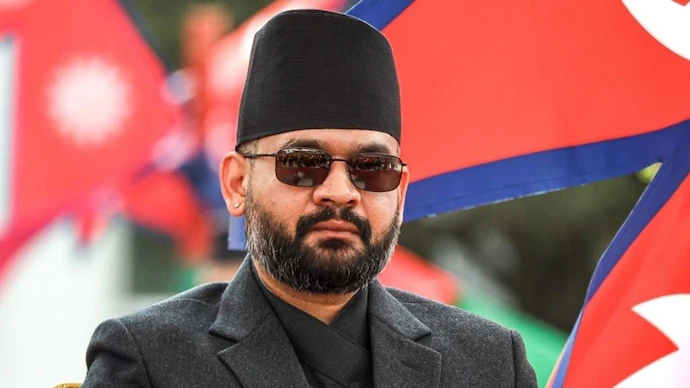
Nepal Prime Minister Balendra Shah has triggered a major political controversy after suggesting that territorial encroachment between India and Nepal is not one-sided, reigniting debate over the decades-old border dispute between the two neighbours.
Speaking in Parliament during his first major address since taking office, Shah said he had recently learned that the border issue extends beyond Nepal’s claims against India.
“India has occupied some Nepali land, but there are also places where Nepal has occupied Indian land,” Shah told lawmakers, urging both countries to move beyond political rhetoric and instead rely on historians, surveyors and technical experts to determine the facts.
The remarks immediately sparked uproar across Nepal’s political spectrum, with opposition leaders demanding evidence for the claim and calling for the statement to be withdrawn from the parliamentary record.
Foreign Ministry Moves to Clarify
As criticism mounted, Nepal’s Foreign Ministry stepped in to clarify Shah’s remarks.
The ministry said the Prime Minister was referring to instances of cross-border occupation and disputed areas where residents from both countries have been using land across the boundary due to missing or damaged border pillars. It stressed that Shah was not claiming Nepal had officially seized Indian territory.
According to the ministry, technical teams from both countries are already working on border demarcation, maintenance of boundary pillars and the collection of data related to disputed zones along the frontier.
Opposition Demands Answers
Several opposition lawmakers accused the Prime Minister of making a sensitive statement without presenting supporting evidence.
Former Foreign Minister Pradip Gyawali reportedly sought an explanation, while other lawmakers demanded the remarks be removed from official records unless substantiated.
Border experts also questioned the claim. Veteran geographer and Nepal-India border specialist Buddhi Narayan Shrestha argued that while local residents sometimes cultivate land across the border because of unclear demarcation, there is no documented case of Nepal officially occupying Indian territory.
Former Diplomats Push Back
The statement also drew criticism from former diplomats.
Former Nepal ambassador to India Nilambara Acharya said there is no official evidence that Nepal has encroached on Indian land, noting that nearly all boundary issues between the two countries have already been resolved.
Another former envoy, Deep Kumar Upadhyay, said India has never formally raised such a complaint during bilateral discussions, making Shah’s comments all the more surprising.
Fresh Tensions Over Lipulekh and Kalapani
The controversy comes just weeks after Nepal objected to India’s facilitation of the Kailash Mansarovar Yatra through the Lipulekh route.
Kathmandu maintains that Lipulekh, Limpiyadhura and Kalapani belong to Nepal under the 1816 Sugauli Treaty. India rejects the claim and considers the territories part of Uttarakhand.
The dispute intensified in 2020 when Nepal released a revised political map showing all three areas within its borders, a move New Delhi dismissed as a unilateral attempt to redraw boundaries.
Border Issue Remains Unresolved
The strategically important region lies near the India-China-Nepal tri-junction and remains one of the most sensitive issues in bilateral relations.
While both governments continue to insist that the matter should be resolved through dialogue, Shah’s comments have reopened a politically charged debate inside Nepal and added a fresh layer of complexity to an already contentious border dispute.