Rising Oil Crisis Pushes Government Into Economic Caution Mode
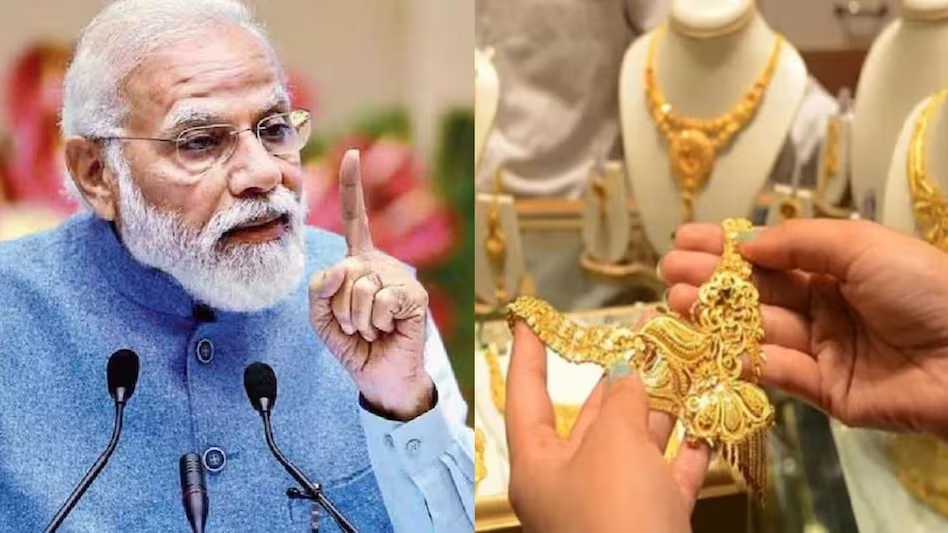
As tensions in the Middle East continue to disrupt global energy markets, Prime Minister Narendra Modi has urged Indians to reduce non-essential spending, avoid unnecessary foreign travel, cut fuel consumption and limit gold purchases.
Speaking at an event in Hyderabad, Modi appealed to citizens to adopt a more cautious lifestyle as India faces mounting pressure from soaring oil and import costs.
The remarks come at a time when the prolonged conflict involving Iran has shaken global energy supply chains and sharply increased concerns over India’s economic stability.
Why The Government Is Worried
India depends heavily on imports to meet its energy needs.
Nearly 90 per cent of the country’s crude oil and a significant portion of its natural gas requirements come from foreign suppliers. Any disruption in global shipping routes or spikes in oil prices directly impacts India’s economy.
One of the biggest concerns is the Strait of Hormuz — a crucial global oil transit route through which a large share of the world’s crude supply passes.
With instability in the region continuing, India’s import bill for oil, gas and fertilisers has risen sharply in recent months.
Fuel, Flights And Gold Becoming Costlier
The impact is already visible across sectors.
Airfares have increased as airlines pass rising fuel costs on to passengers. Overseas travel has become more expensive due to a weaker rupee and higher aviation fuel prices.
Gold imports — long seen as a major pressure point on India’s foreign exchange reserves — have also come under scrutiny. The government recently increased import duties on gold and silver in an effort to reduce dollar outflow.
Officials believe excessive spending on imported luxury goods and foreign travel could further strain the country’s finances during a period of global uncertainty.
India Has Strong Reserves, But Pressure Is Rising
Unlike the 1991 balance-of-payments crisis, India is not facing an immediate shortage of foreign currency reserves.
The country still holds one of the world’s largest forex reserves, enough to cover several months of imports.
However, economists say the pace of dollar outflow has become a growing concern.
Higher import costs, slowing exports, weaker foreign investment inflows and global uncertainty have together put pressure on the rupee and India’s external finances.
In recent months, India’s forex reserves have reportedly declined significantly as global markets reacted to the Middle East crisis.
Government Trying To Avoid Bigger Economic Shock
Experts believe Modi’s public appeal reflects concerns within the government over inflation, fiscal pressure and currency stability.
Rising oil prices increase transportation and manufacturing costs, eventually pushing up prices of everyday goods and services.
Economists warn that if crude prices remain elevated for a prolonged period, inflation could rise sharply and force stricter economic measures.
A weaker rupee also makes imports more expensive, further adding to inflationary pressure.
Investor Confidence Also Under Pressure
Apart from the energy crisis, India is also facing challenges in attracting large foreign investments compared to other Asian economies.
Global investors have reportedly become cautious amid concerns over slowing global trade, geopolitical instability and competition in sectors like artificial intelligence, semiconductors and electric vehicles.
Market analysts say foreign funds have pulled billions of dollars from Indian equities in recent months, increasing pressure on financial markets.
Why Gold Purchases Matter
India is among the world’s largest consumers of gold, and large-scale imports of the precious metal require massive amounts of foreign currency.
During periods of economic uncertainty, governments often try to discourage excessive gold buying to conserve dollar reserves and stabilise external finances.
This is one reason why policymakers are encouraging more restrained spending habits at a time of global volatility.
Government Signals Tougher Economic Phase Ahead
While the government maintains that India’s economy remains stable, economists believe the coming months could bring tougher financial conditions if global conflicts continue and oil prices remain high.
Modi’s call for caution signals that the government wants citizens to prepare for a period of economic uncertainty where controlling imports, conserving fuel and reducing non-essential spending may become increasingly important.